|
|
|
NYLON SLINGS
SAFETY PRECAUTIONS
The user of West Coast Wire Rope brand nylon lifting
and excessive abrasion of the web. If the inner core
RED
slings must insure all safety precautions are used during
safety threads are visible, immediately remove from serv
the application and storage of our sling and web assembly
ice. We strongly recommend that any sling not meeting
products.
complete safety criteria be cut if half and discarded.
All RATED CAPACITIES shown in the catalog are based
Safety to people and equipment must be the primary
on new and unused products. Inspect each sling prior to
objective.
each and every use. Check for cuts, tears, chemical burns
USER'S GUIDE
WEB SLING CHARACTERISTICS
LOAD PROTECTION
Will not mar, deface, or scratch the most highly sensitive loads.
CONVENIENCE
Lightweight and extremely flexible.
SAFETY
Will hold with non slip grip. Load bearing inner fibers are completely covered and protected by tough outer
fibers. Non sparking. All slings have a minimum 5 to 1 design factor. All slings are provided with a vinyl tag marked
with capacities and information currently required by OSHA.
LONG LIFE
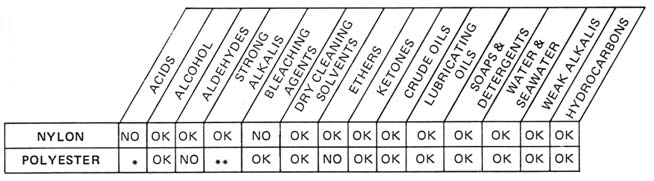
Very resistant to rot, mildew or bacteria. Unaffected by many chemicals and have excellent abrasion
resistance. (See environmental consideration chart)
SHOCK ABSORBENT
Synthetic web slings have elongation characteristics which minimize the effects of shock
loading.
INDICATOR CORE
All slings have
RED
indicator core yarns to assist in determining sling wear or damage. If the
core yarns are visible, the sling must be replaced.
ULTRA VIOLET DEGRADATION
Continuous exposure to ultraviolet light can affect strength of synthetic slings
ranging from slight to total degradation. Store in a dark, cool area.
INSPECTIONS
The user should make a thorough visual inspection of thesling prior to each use. Users should insure that the proper
sling is being used for each specific application. Remove the sling from use if any of the following conditions exist:
Acid or Caustic burns.
Excessive abrasive wear.
Melted, charred, or welding splatter.
Knots in any part of the sling.
Broken or worn stitching.
Holes, tears, cuts, snags, or embedded particles.
RED
core yarn showing.
Any other damage.
Damaged loop eye.
ENVIRONMENTAL CONSIDERATIONS
To prevent mechanical or chemical damage when not in use, slings should not be exposed to sunlight and must be
stored in a cool, dry and dark place.
NYLON AND POLYESTER
SLINGS SHOULD NOT BE
USED AT TEMPERATURES
IN EXCESS OF 194
o
F (90
o
C)
*Disintegrated by concentrated sulphuric acids.
**Degraded by strong alkalines at elevated temperatures.
138